



Carotenoid biosynthesis drives root plasticity through aerenchyma and iron plaque formation in rice
Our study decouples the mechanisms of iron plaque and aerenchyma formation, revealing that these two processes, previously assumed to be mechanistically linked, are regulated independently by distinct hormonal pathways.Through a forward gen...

Dual-cycle CO2 fixation enhances growth and lipid synthesis in Arabidopsis thaliana
Plants fix carbon dioxide through photosynthesis, converting it into organic compounds. However, during photorespiration and lipid biosynthesis, significant amount the fixed carbon is released back into the atmosphere. To solve this ineffic...

ENA1, a newly identified root NA exporter in Arabidopsis, modulates zinc homeostasis
A research team led by Dr. Kuo-Chen Yeh identified ENA1, a plasma membrane-localized transporter that mediates the root secretion of nicotianamine (NA) — a key metal chelator. This discovery uncovers a novel mechanism by which plants regula...
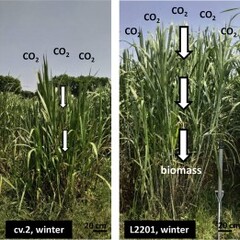
L2201 Napier Grass: A Cold-Resilient Line for Sustainable Bioenergy and Carbon Sequestration
This work addresses a fundamental barrier in biomass production: the seasonal limitation of C4 grasses like Napier due to cold sensitivity. L2201 breaks through this constraint, extending productivity into cooler months, demonstrated by its...
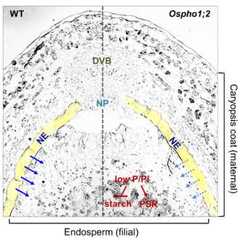
Maternal effect contributes to grain-filling defects of Ospho1;2 rice mutants
In seeds, filial and maternal tissues are symplastically isolated. Nutrient delivery through plasma membrane-localized transporters at the junction of filial and maternal tissues is indispensable for sustaining endosperm and embryo developm...
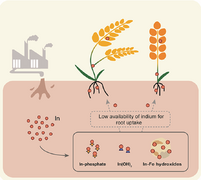
Indium uptake and accumulation by rice and wheat and health risk associated with their consumption
The increasing use of indium in high-tech industries has inevitably caused its release into the environment. However, knowledge of its environmental fate has been very limited so far. Previously, we found that indium jeopardized phosphate u...
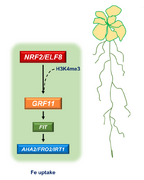
Histone H3 lysine4 trimethylation-regulated GRF11 expression is essential for the iron deficiency response in Arabidopsis thaliana
A mutant, non-response to fe-deficiency2 (nrf2) with defects on the response to Fe deficiency, was selected by a designed genetic screening. The corresponding gene NRF2 encodes a tetratricopeptide repeat (TPR) domain-containing protein and ...
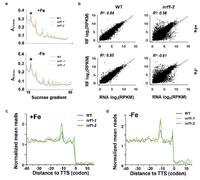
A HemK class glutamine-methyltransferase is involved in the termination of translation and essential for iron homeostasis in Arabidopsis
Fe-deficiency induced transcriptional cascades controls Fe transport and utilization is important for plant to maintain homeostasis of this important element executing the biological function. So far, we know that many genes participating i...
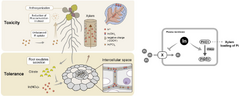
Assessment of indium toxicity to the model plant Arabidopsis
The use of indium in semiconductor products has increased markedly in recent years. The release of indium into the ecosystem is inevitable. Under such circumstances, effective and accurate assessment of indium risk is important. An indispen...
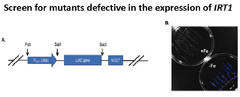
The dual benefit of a dominant mutation in Arabidopsis IRON DEFICIENCY TOLERANT1 for iron biofortification and heavy metal phytoremediation
Iron (Fe) is an essential element for all organisms. Fe deficiency-related health defects, especially anemia, is a big challenge to human health. In addition, imbalanced Fe homeostasis affects plants development and productivity in agricult...
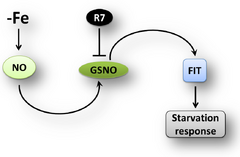
S-nitrosoglutathione works downstream of nitric oxide to mediate iron deficiency signaling in Arabidopsis
Several studies elucidated the transcriptional responses to iron (Fe) starvation, however, the Fe sensing and signal transduction machineries are poorly resolved thus far in plants. With this focus, by using chemical biology approach, we id...
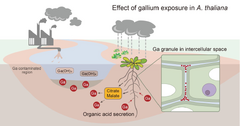
Effect of gallium exposure in Arabidopsis thaliana is similar to aluminum stress
The manuscript describes the first thorough exploration of gallium exposure in the model plant Arabidopsis. Gallium, a rare element, is one of the major elements in semiconductor compounds that are used in integrated circuits and optoelectr...
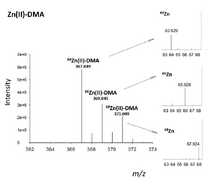
Identification of metal species by ESI-MS/MS through release of free metals from the corresponding metal-ligand complexes
Our manuscript describes a new approach for the identification of metal species using ESI-MS/MS through releasing the free metals from the corresponding metal-ligand complexes. The approach has potential for the accurate and simultaneous id...
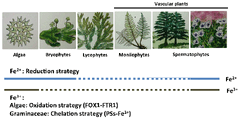
Evolutionary analysis of Fe acquisition system in Marchantia polymorpha
Fe is essential for plant growth but toxic in excess. To acquire appropriate Fe, vascular plants have developed two unique strategies in sporophyte generation, the reduction-based Strategy I of non-graminaceous plants for Fe2+ and the chela...
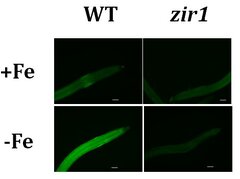
Glutathione plays an essential role in nitric oxide-mediated iron deficiency signaling and iron deficiency tolerance in Arabidopsis
In this study, we found that the zir1 mutant, defective in glutathione production, was found to be more sensitive to Fe deficiency than the wild type, and grew poorly in alkaline soil. Furthermore, the key genes involved in Fe uptake are ex...
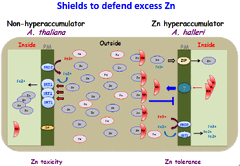
Root-secreted nicotianamine from Arabidopsis halleri facilitates zinc hypertolerance by regulating zinc bioavailability
Heavy metal hyperaccumulators grow endemically on metal-rich soils and exhibit extraordinarily high metal tolerance. Arabidopsis halleri, one of 500 found heavy metal hyperaccumulators in the world, is recognized as a zinc hyperaccumulator....
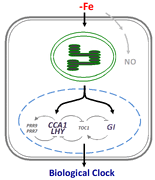
Iron is involved in maintenance of circadian period length in Arabidopsis
Fe nutrient and circadian period lengthThe daily biological rhythms of many organisms are regulated by a near 24-hour circadian clock. In plants, the central oscillator controls a range of important physiological output processes such as fl...
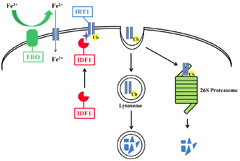
IRT1 DEGRADATION FACTOR1, a RING E3 ubiquitin ligase, regulates the degradation of IRON-REGULATED TRANSPORTER1 in Arabidopsis
Iron is an essential micronutrient whose uptake is strictly regulated in plants. IRON-REGULATED TRANSPORTER 1 (IRT1) is the major transporter for ferrous Fe uptake in A. thaliana. In Fe homeostasis, constitutive turnover is one of the most ...
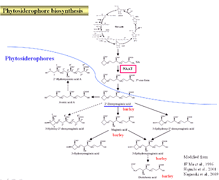
A sensitive LC-ESI-Q-TOF-MS method for the detection of phytosiderophores and their iron complexes in roots
Under Fe deficiency, plant roots secrete specific compounds such as organic acids and phytosiderophores into the rhizosphere to increase Fe bioavailability by changing the soil pH or by binding to ferric Fe. Phytosiderophores are non-protei...
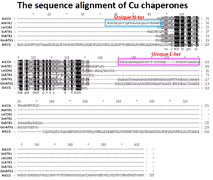
Copper chaperone antioxidant protein 1 is essential for copper homeostasis
Many heavy metals are essential as trace nutrients for living organisms. These essential heavy metals can also cause toxicity at high levels. Plants have evolved a range of homeostasis mechanisms to minimize the harmful effects and maintain...