


Assessment of indium toxicity to the model plant Arabidopsis
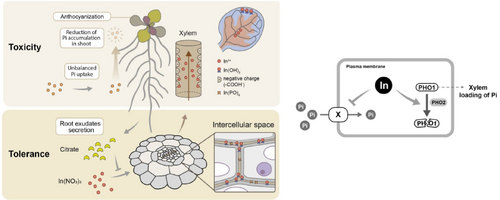
The use of indium in semiconductor products has increased markedly in recent years. The release of indium into the ecosystem is inevitable. Under such circumstances, effective and accurate assessment of indium risk is important. An indispensable aspect of indium risk assessment is to understand the interactions of indium with plants, which are fundamental components of all ecosystems. Physiological responses of Arabidopsis thaliana exposed to indium were investigated by monitoring toxic effects, accumulation and speciation in plants. It was found that indium jeopardized phosphate uptake and translocation by inhibiting the accumulation of phosphate transporters PHOSPHATE TRANSPORTER1 (PHT1;1/4), responsible for phosphate uptake, and PHOSPHATE1 (PHO1), responsible for phosphate xylem loading.
H.-F. Chang, S.-L. Wang*, D.-C. Lee, S. S.-Y. Hsiao, Y. Hashimoto, and K.-C. Yeh * (2020) Journal of Hazardous Materials,