


A Novel Adductomics Workflow Incorporating FeatureHunter Software: Rapid Detection of Nucleic Acid Modifications for Studying the Exposome
Exposure to the physicochemical agents that interact with nucleic acids (NA) may lead to modification of DNA and RNA (i.e., NA modifications), which have been associated with various diseases, including cancer. The emerging field of NA addu...

Deciphering a Half-Century Enigma: Unveiling the Role of Pathogenesis-Related Protein 1 (PR1) in Plant Immunity
A study has unraveled a mystery that persisted for fifty years in plant science – the elusive role of Pathogenesis-Related Protein 1 (PR1) in plant immunity. Led by Dr. Yet-Ran Chen at the Agricultural Biotechnology Research Center of Acade...
An Improved Scoring Method for the Identification of Endogenous Peptides based on Mascot MS/MS Ion Search
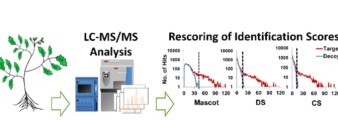
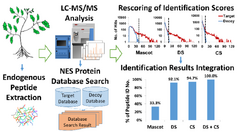
To identify the endogenous peptides using MS/MS analysis and searching against a polypeptide sequence database, a non-enzyme specific (NES) search considering all of the possible proteolytic cleavages is required. However, the use of a NES ...
Application of Data-Independent Acquisition Approach to Study the Proteome Change from Early to Later Phases of Tomato Pathogenesis Responses
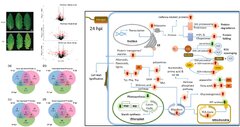
Plants and pathogens are entangled in a continual arms race. Plants have evolved dynamic defence and immune mechanisms to resist infection and enhance immunity for second wave attacks from the same or different types of pathogenic species. ...
The role of peptides cleaved from protein precursors in eliciting plant stress reactions
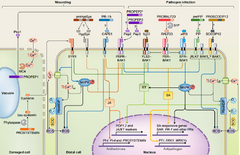
As sessile organisms, plants are exposed to diverse abiotic and biotic stresses, and thus have developed complex signaling mechanisms that orchestrate multiple stress responses. Plant peptides have recently emerged as key signaling molecule...
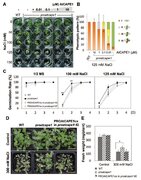
A salt-regulated peptide derived from the CAP superfamily protein negatively regulates Salt-stress tolerance in Arabidopsis
High salinity has negative impacts on plant growth through altered water uptake and ion-specific toxicities. Plants have therefore evolved an intricate regulatory network in which plant hormones play significant roles in modulating physiolo...
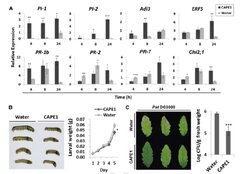
Quantitative Peptidomics Study Reveals That a Wound-Induced Peptide from PR-1 Regulates Immune Signaling in Tomato
Many important cell-to-cell communication events in multicellular organisms are mediated by peptides, but only a few peptides have been identified in plants. In an attempt to address the difficulties in identifying plant signaling peptides,...
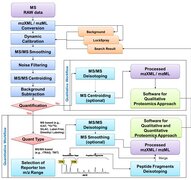
UniQua: A Universal Signal Processor for MS-Based Qualitative and Quantitative Proteomics Applications
Recent developments in high resolution mass spectrometry (HR-MS) technology have ushered proteomics into a new era. However, the importance of using a common, open data platform for signal processing of HR-MS spectra has not been sufficient...

Tunnel Frit: A Nonmetallic In-Capillary Frit for Nanoflow Ultra High-Performance Liquid ChromatographyMass SpectrometryApplications
In this study, an easy method to fabricate a durable in-capillary frit was developed for use in nanoflow liquid chromatography (nanoLC). A small orifice was tunneled into the sol_gel frit during the polymerization process resulting in the s...
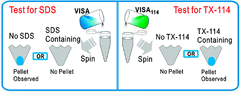
Visual Indicator for Surfactant Abundance in MS-Based Membrane and General Proteomics Applications
The existence of surfactants in proteomics samples can severely reduce enzymatic digestion efficiency, liquid chromatography (LC) separation efficiency, column lifetime, and mass spectrometry (MS) sensitivity. Although various techniques ar...