



Water as a Compass: Hydrostimulation-Triggered Aerial Root Growth in Phalaenopsis aphrodite
Epiphytic orchids have evolved specialized adaptive strategies, such as aerial roots with water- absorbing velamen tissues, to cope with water- scarce and nutrient- deficient habitats. Our previous study revealed that the aerial roots of...

Optimized ribosome profiling reveals new insights into translational regulation in synchronized Chlamydomonas reinhardtii cultures
Deep sequencing of ribosome footprints, also known as ribosome profiling (Ribo-seq), enables the quantification of mRNA translation and a comprehensive view of the translatome landscape. Here, we report an optimized Ribo-seq protocol and an...
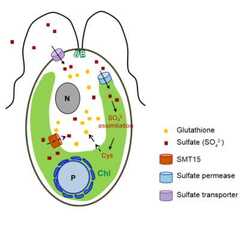
A chloroplast sulphate transporter modulates glutathione-mediated redox cycling to regulate cell division
Glutathione redox cycling is important for cell cycle regulation, but its mechanisms are not well understood. We previously identified a small-sized mutant, suppressor of mat3 15-1 (smt15-1) that has elevated cellular glutathione. Here, we ...
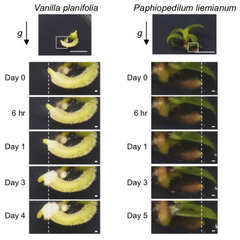
Diverse geotropic responses in the orchid family
In epiphytes, aerial roots are important to combat water‐deficient, nutrient‐poor, and high‐irradiance microhabitats. However, whether aerial roots can respond to gravity and whether auxin plays a role in regulating aerial root development ...

Co-option of SHOOT MERISTEMLESS network regulates protocorm-like-body development in Phalaenopsis aphrodite
The protocorm is a structure that is formed upon germination of an orchid seed. It lacks cotyledons and is ovoid in shape. Protocorm-like body (PLB), on the other hand, is a protocorm-like organ induced from somatic tissues. PLBs have been ...
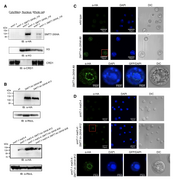
SUMO protease SMT7 modulates ribosomal protein L30 to regulate cell-size checkpoint function
Proliferating cells actively coordinate growth and cell division to ensure cell-size homeostasis; however, the underlying mechanism through which size is controlled is poorly understood. Defect in a SUMO protease protein, suppressor of mat3...
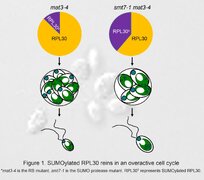
Size control study of microalga reveals secret of aberrant cell division!
Retinoblastoma (RB) is the first identified tumor suppressor. Mutation in RB not only causes retinoblastoma, its mutation is also associated with many types of cancer. Hence, it is important to study how the RB pathway regulates cell divisi...