
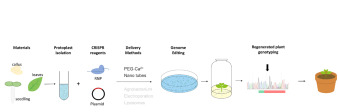


Breakthrough of wild tomato protoplast regeneration and DNA-free CRISPR-Cas9 genome editing.
Wild tomato (Solanum peruvianum) is an important genetic source for the tomato breeding but the progress has been hampered due to the self-incompatibility and highly heterozygous genome. Yao-Cheng Lin, Choun-Sea Lin and Ming-Che Shih from A...
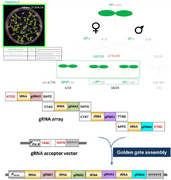
How to start your monocot CRISPR/Cas project: plasmid design, efficiency detection, and offspring analysis
The breakthrough CRISPR (clustered regularly interspaced short palindromic repeat)/Cas9-mediated genome-editing technology has led to great progress in monocot research; however, several factors need to be considered for the efficient imple...
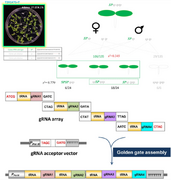
Application of Cas12a and nCas9-activation-induced cytidine deaminase for genome editing and as a non-sexual strategy to generate homozygous/multiplex edited plants in the allotetraploid genome of tobacco
Protoplast transfection and regeneration systems are useful platforms for CRISPR/Cas mutagenesis and genome editing. In this study, we demonstrate the use of Cpf1 (Cas12a) and nCas9-activation-induced cytidine deaminase (nCas9-Target-AID) s...
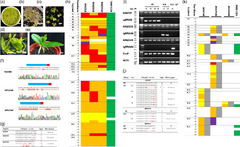
High-efficiency CRISPR/Cas-based editing of Phalaenopsis orchid MADS genes
Phalaenopsis orchids are popular potted ornamental plants around the world due to their beauty, floral diversity and long indoor blooming period. Orchids are also important in plant research, having tiny, dust‐like seeds, crassulacean acid ...
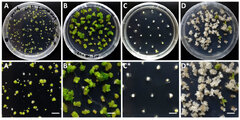
Application of protoplast technology to CRISPR/Cas9 mutagenesis: From single cell mutation detection to mutant plant regeneration
Plant protoplasts are useful for assessing the efficiency of Clustered Regularly Interspaced Short Palindromic Repeats (CRISPR)/CRISPR Associated Protein 9 (Cas9) mutagenesis. We improved the process of protoplast isolation and transfection...
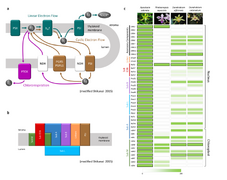
Concomitant loss of NDH complex-related genes within chloroplast and nuclear genomes in some orchids
Chloroplast NAD(P)H dehydrogenase-like (NDH) complex consists of ~30 subunits from both the nuclear and chloroplast genomes and is ubiquitous across most land plants. In some orchids, such as Phalaenopsis equestris, Dendrobium officinale an...

Catalog of Erycina pusilla miRNA and categorization of reproductive phase-related miRNAs and their target gene families
The orchid Erycina pusilla has a short life cycle and relatively low chromosome number, making it a potential model plant for orchid functional genomics. To that end, small RNAs (sRNAs) from different developmental stages of different organ...

Global transcriptome analysis and identification of a CONSTANS-like gene family in the orchid Erycina pusilla
The high chromosome numbers, polyploidy genomes, and long juvenile phases of most ornamental orchid species render functional genomics difficult and limit the discovery of genes influencing horticultural traits. The orchid Erycina pusilla h...
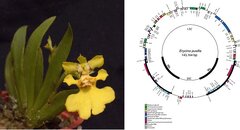
Complete Chloroplast Genome Sequence of an Orchid Model Plant Candidate: Erycina pusilla Apply in Tropical Oncidium Breeding
Oncidium is an important ornamental plant but the study of its functional genomics is difficult. Erycina pusilla is a fast-growing Oncidiinae species. Several characteristics including low chromosome number, small genome size, short growth ...
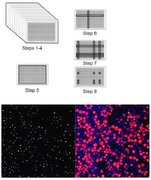
Screening a cDNA Library for Protein–Protein Interactions Directly in Planta
Screening cDNA libraries for genes encoding proteins that interact with a bait protein is usually performed in yeast. However, subcellular compartmentation and protein modification may differ in yeast and plant cells, resulting in misidenti...