



Arabidopsis research in 2030: Translating the computable plant
Plants are essential for human survival. Over the past three decades, work with the reference plant Arabidopsis thaliana has significantly advanced plant biology research. One key event was the sequencing of its genome 25 years ago, which f...
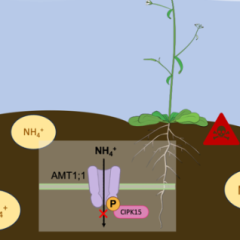
CIPK15-mediated inhibition of NH4+transport protects Arabidopsis from submergence
Nitrogen is widely recognized as a crucial element for plants due to its role as a fundamental building block for essential macromolecules such as nucleic acids, amino acids, and proteins. In most soils, nitrogen primarily exists in inorgan...
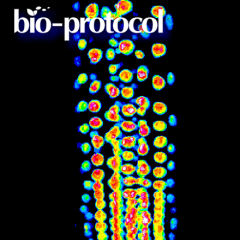
User Manual for the Fluorescent Biosensor nlsNiMet3.0 for Nitrate Ion Detection
In 2022, Dr. Cheng-Hsun Ho and his laboratory team published the first fluorescent resonance energy transfer (FRET) sensor for detecting nitrate ions (NO3–) within plant organisms in the journal Science Advances (Full article link: https://...
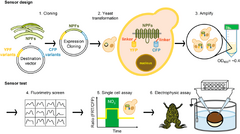
Concept of Fluorescent Transport Activity Biosensor for the Characterization of the Arabidopsis NPF1.3 Activity of Nitrate
The NRT1/PTR FAMILY (NPF) in Arabidopsis (Arabidopsis thaliana) plays a major role as a nitrate transporter. The first nitrate transporter activity biosensor NiTrac1 converted the dual affinity nitrate transceptor NPF6.3 into fluorescence a...

Watching biochemistry live - Genetically encoded FRET sensor for nitrate dynamics in plants
A team led by Dr. Cheng-Hsun Ho at the Agricultural Biotechnology Research Center has developed for the first time, a genetically engineered fluorescence resonance energy transfer (FRET) nitrate biosensor that measures the levels of nitrate...
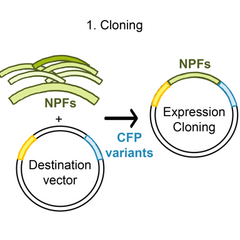
Concept of Fluorescent Transport Activity Biosensor for the Characterization of the Arabidopsis NPF1.3 Activity of Nitrate
The NRT1/PTR FAMILY (NPF) in Arabidopsis (Arabidopsis thaliana) plays a major role as a nitrate transporter. The first nitrate transporter activity biosensor NiTrac1 converted the dual affinity nitrate transceptor NPF6.3 into fluorescence a...
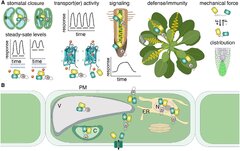
Designs, applications, and limitations of genetically encoded fluorescent sensors to explore plant biology
The understanding of signaling and metabolic processes in multicellular organisms requires knowledge of the spatial dynamics of small molecules and the activities of enzymes, transporters, and other proteins in vivo, as well as biophysical ...

Designs, applications, and limitations of genetically encoded fluorescent sensors to explore plant biology
The understanding of signaling and metabolic processes in multicellular organisms requires knowledge of the spatial dynamics of small molecules and the activities of enzymes, transporters, and other proteins in vivo, as well as biophysical ...
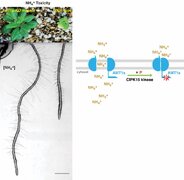
Feedback inhibition of AMT1 NH4+-transporters mediated by CIPK15 kinase
Background: Ammonium (NH4+), a key nitrogen form, becomes toxic when it accumulates to high levels. Ammonium transporters (AMTs) are the key transporters responsible for NH4+ uptake. AMT activity is under allosteric feedback control, mediat...
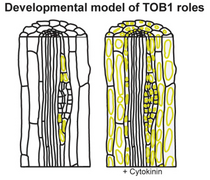
TRANSPORTER OF IBA1 Links Auxin and Cytokininto Influence Root Architecture
Developmental processes that control root system architecture are critical for soil exploration by plants, allowing for uptake of water and nutrients. Conversion of the auxin precursor indole-3-butyric acid (IBA) to active auxin (indole-3-a...
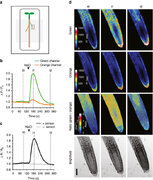
Ratiometric Matryoshka biosensors from a nested cassette of green- and orange-emitting fluorescent proteins
Sensitivity, dynamic and detection range as well as exclusion of expression and instrumental artifacts are critical for the quantitation of data obtained with fluorescent protein (FP)-based biosensors in vivo. Current biosensors designs are...
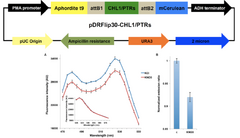
Design and Functional Analysis of Fluorescent Nitrate and Peptide Transporter Acativity Sensors in Yeast Cultures
This protocol describes the methods used to engineer and deploy genetically encoded fluorescence activity reporters for nitrate and peptide transporter activity in yeast cells. Fusion of the dual-affinity nitrate transceptor CHL1/AtNRT1.1/A...