Phytoagents for cancer management: regulation of nucleic acid oxidation, ROS, and related mechanisms
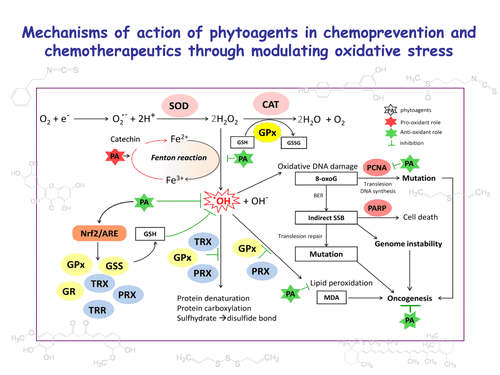
Accumulation of oxidized nucleic acids can cause genomic instability leading to senescence, apoptosis, and tumorigenesis. Phytoagents have attracted considerable attention for their observed effects in reducing the risk of cancer development and recurrence. Whether the chemopreventive effects of these phytoagents are mainly through regulating the extent of nucleic acid oxidation in cancer cells remains obscure. Here, we summarize currently available data on the role of reactive oxygen species (ROS) in nucleic acid oxidation as a driving force in cancer progression. The consequential relationship between genome oxidative damage and cancer progression highlights the importance of modulation of cellular redox level in cancer management. We have collected current published epidemiological and experimental evidence that illustrates the role and modes of action of phytoagents in nucleic acid oxidation and consider specific phytoagents that may be useful in cancer therapy. Evidence shows that vitamins and various other phytoagents possess free radical scavenging activity that has a quenching effect on oxidized DNA, and function via stimulation of the endogenous defence systems such as Nrf2-regulated pathways, to antagonize carcinogen-triggered oxidative stress. Further, metal ion chelation is another mechanism by which phytoagents protect DNA from oxidative damage caused by transition metal ions. In addition to the chemopreventive effect conferred by antioxidant properties, the pro-oxidant effects of phytoagents are also gaining attention for their selective cytotoxicity in cancers. This review outlines the different facets of the “double-edged sword” role of phytoagents as redox regulators of nucleic acid oxidation in carcinogenensis, and their possible roles in cancer prevention or therapy.
Wai-Leng Lee#, Jing-Ying Huang#, and
Lie-Fen Shyur
* (2013) Phytoagents for cancer management: regulation of nucleic acid oxidation, ROS, and related mechanisms Oxidative Medicine and Cellular Longevity