Cytopiloyne, a novel polyacetylenic glucoside from Bidens pilosa , functions as a T helper cell modulator
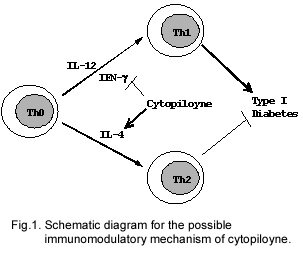
An extract of Bidens pilosa, an anti-diabetic Asteraceae plant, has recently been reported to modulate T cell differentiation and prevent the development of non-obese diabetes (NOD) in NOD mice. In this paper, a novel bioactive polyacetylenic glucoside, cytopiloyne, was identified from the Bidens pilosa extract using ex vivo T cell differentiation assays based on a bioactivity-guided fractionation and isolation procedure. Its structure was elucidated as 2b-d-glucopyranosyloxy-1-hydroxytrideca-5,7,9,11-tetrayne by various spectroscopic methods. Functional studies showed that cytopiloyne was able to inhibit the differentiation of naive T helper (Th0) cells into type I T helper (Th1) cells but to promote the differentiation of Th0 cells into type II T helper (Th2) cell. Accordingly, cytopiloyne also suppressed IFN-g expression and promoted IL-4 expression in mouse splenocytes ex vivo. These results suggest that cytopiloyne functions as a T cell modulator that may directly contribute to the ethnopharmacological effect of Bidens pilosa extract on preventing diabetes (Fig.1). Moreover, cytopiloyne can serve as an index compound for quality control of lot-to-lot extract preparations of Bidens pilosa.
Chiang, Y.M., Chang, C.L.T., Chang, S.L., Yang, W.C.*, Shyur, L.F.* Cytopiloyne, a novel polyacetylenic glucoside from Bidens pilosa , functions as a T helper cell modulator