A novel polyacetylene significantly inhibits angiogenesis and promotes apoptosis in human endothelial cells through activation of the CDK inhibitors and caspase-7
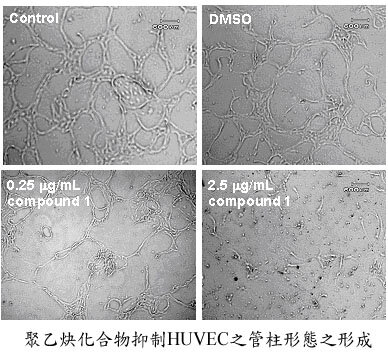
A novel bioactive polyacetylene compound, 1,2-dihydroxy-5(E)-tridecene-7,9,11-triyne (compound 1), was identified from the Bidens pilosa extract using ex vivo primary human umbilical vein endothelium cell (HUVEC) bioassay-guided fractionation protocol. Our results demonstrate that compound 1 (at 2.5μg/mL) indeed possessed significant anti-angiogenic effects, as manifested by an inhibition of HUVEC proliferation, migration, and the formation of tube-like structures in collagen gel. Moreover, compound 1 induced HUVEC to undergo cell death in a concentration and time-dependent manner. The mechanisms underlying these pharmacological effects include a reduced expression of cell cycle mediators such as CDK4, cyclins D1 and A, retinoblastoma (Rb) and vascular endothelial growth factor receptor 1 (VEGFR-1), and a promotion of caspase-mediated activation of CDK inhibitors p21(Cip1) and p27(Kip). Moreover, apoptotic induction in HUVEC mediated by compound 1 was found to be in part through overexpression of FasL protein, down-regulation of anti-apoptotic Bcl-2, and activation of caspase-7 and poly (ADP-ribose) polymerase. This study demonstrates potent anti-angiogenic and apoptotic activities of compound 1, suggesting that phytocompounds such as polyacetylene deserve more attention on its potential for further development as anti-angiogenic therapeutics.
Wu, L. W., Chiang, Y. M., Chuang, H. C., Lo, C. P., Yang, K. Y., Wang, S. Y. and Shyur, L. F.* (2007) A novel polyacetylene significantly inhibits angiogenesis and promotes apoptosis in human endothelial cells through activation of the CDK inhibitors and caspase-7 Planta Medica